
Therapeutic Drumming
The Rhythm of Your HEALTH

What is Therapeutic Drumming?
Therapeutic drumming—the intentional use of rhythm and percussion to support well-being—offers benefits that extend far beyond simply feeling good. Research suggests that drumming can help reduce stress, support cognitive function, strengthen social connection, and promote overall physical and emotional wellness.
When we engage with rhythm, something remarkable happens. The brain, body, and nervous system begin to work together in new ways, creating positive changes that researchers continue to explore. What may seem like a simple act of making music is actually a powerful tool for connection, expression, and health.
While drumming has been used for centuries across cultures to bring people together, modern science is now helping us understand why rhythm can have such a profound impact on our minds, bodies, and communities.
Who Benefits from Drumming?
Rhythm is Universal
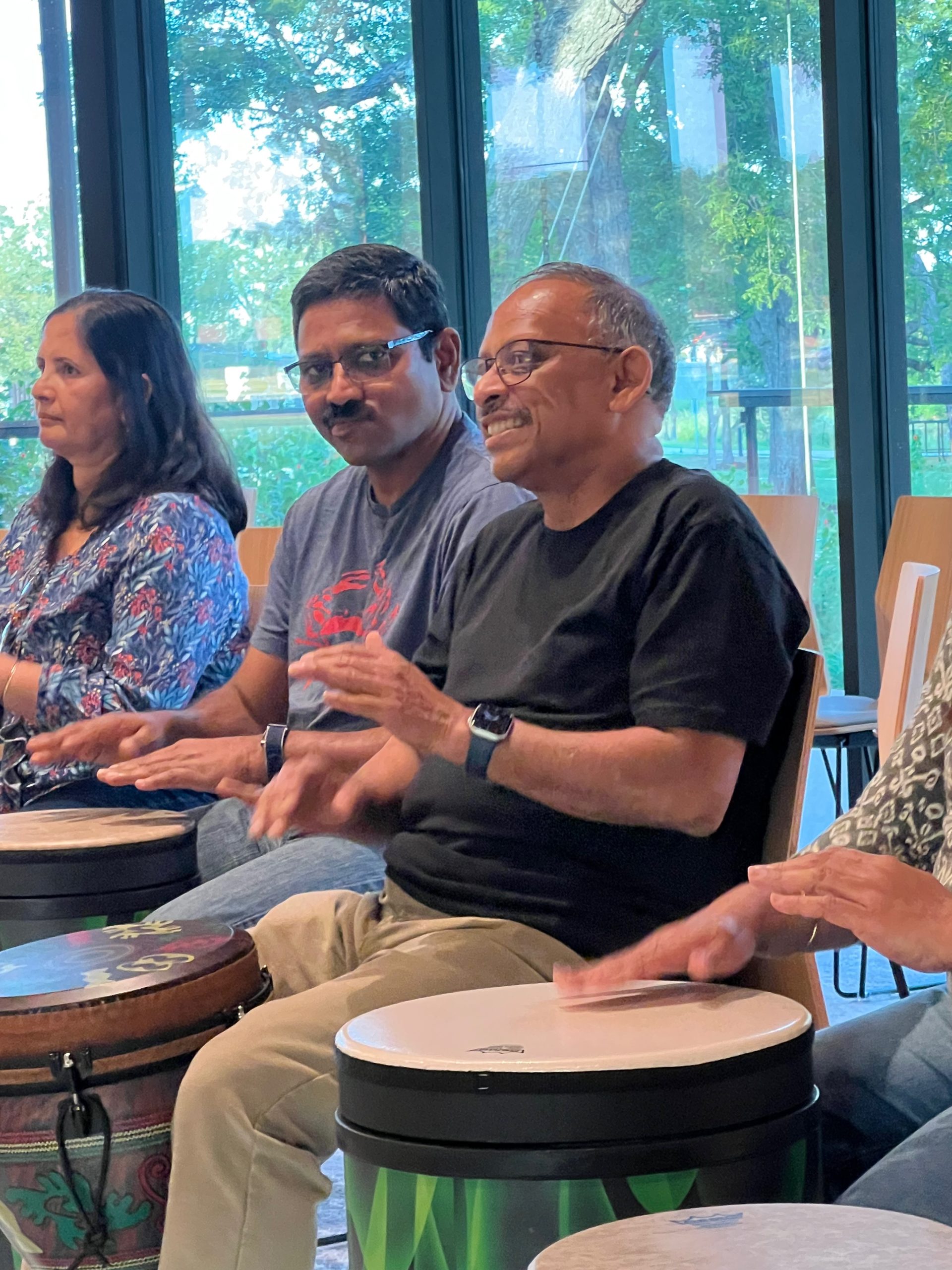
Therapeutic drumming is the intentional use of rhythm and percussion to support physical, emotional, and mental well-being. It’s not about musical talent, learning songs, or perfecting technique. Instead, the focus is on the experience of drumming itself.
The steady repetition of rhythm, the vibration of the drum, and the sense of connection created when people play together can have a powerful impact on the mind and body. Through rhythm, participants can reduce stress, improve focus, express emotions, and experience a deeper sense of connection—with themselves and with others.
At its heart, therapeutic drumming uses one of humanity’s oldest forms of expression as a simple yet powerful tool for wellness, healing, and community.
Today, therapeutic drumming is used in a wide variety of settings, including healthcare facilities, rehabilitation programs, schools, senior living communities, wellness centers, and workplaces. Its growing popularity reflects what many participants experience firsthand: rhythm has a unique ability to bring people together, reduce stress, and support overall well-being.
While therapeutic drumming shares some foundations with music therapy, its approach is often more accessible and participatory. There’s no need for musical experience or performance skills. Instead, the focus is on engaging in rhythm together—creating a space where connection, self-expression, creativity, and wellness can naturally emerge.
Drumming for Healthy Aging
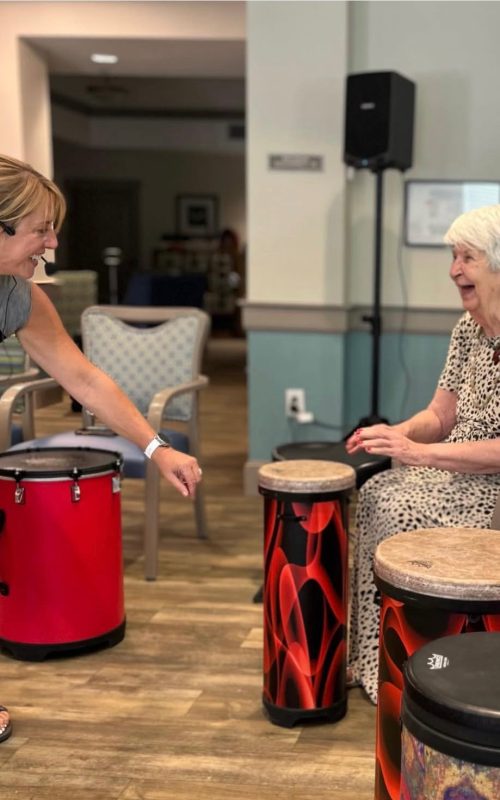
From independent, active older adults to residents living with dementia, therapeutic drumming offers a versatile, inclusive approach to engagement, movement, and connection. Programs can be adapted to meet a wide range of physical and cognitive abilities, making them well-suited for senior living communities.
Participation in group drumming has been shown to support coordination, rhythm awareness, attention, and social engagement. It also provides meaningful opportunities for nonverbal expression and shared experience, which can be especially valuable in memory care settings.
Research in rhythm and neuroscience continues to highlight the cognitive, emotional, and physical benefits of interactive music-making. In senior living environments where isolation and disconnection are ongoing concerns, facilitated drumming programs create structured opportunities for residents to connect, participate, and experience joy in a group setting.
Soulshine Rhythm Experience offers HealthRHYTHMS group drumming and rhythm-based wellness programs designed specifically for senior living communities, including independent living, assisted living, and memory care.
Contact us for a free consultation to learn more about these evidence-based programs. Be sure to visit the Benefits page to explore more research.

Drumming for Mental Health
Drumming can energize or calm the nervous system. It can create space for playfulness, offer a healthy outlet for stress and tension, and support a sense of connection that helps reduce feelings of isolation. For many people, it also becomes a way to reconnect socially in a safe, structured, and welcoming environment.
This is some of the consistent feedback we hear from participants across a wide range of therapeutic and community settings.
As research on rhythm and mental health continues to grow, many practitioners and researchers are exploring how group music-making may support emotional well-being. One widely discussed factor is the combination of rhythmic engagement and shared group experience—the drum circle itself—which can help foster presence, engagement, and a sense of belonging. Many participants also report feeling more grounded and uplifted after sessions, with something meaningful to look forward to each week.
There is also emerging research suggesting that engaging in music and rhythm-based activities may be associated with the release of neurotransmitters involved in mood, motivation, and social bonding, such as dopamine, serotonin, and oxytocin. While individual responses vary, the overall experience is often described as regulating, connecting, and restorative.
Soulshine offers trauma-informed, evidence-informed group and individual rhythm programs to support people navigating:
Addiction recovery
Depression
Anxiety
ADHD
Autism and neurodivergent support
Community and peer support groups
Contact us to learn how we can support your program or community with rhythm-based wellness offerings.

Restoring a sense of inner balance
HealthRHYTHMS can also serve as a rather effective means for restoring a sense of inner balance amidst the incredible challenges of life. Referring to a HealthRHYTHMS session held for students and parents one year after a tragic high school event, Christine Stevens, MT/BC said, “Parents and children came to our drum circle silent, apprehensive and disconnected. At first it was difficult to even maintain eye contact. Knowing words could never communicate what each of us felt that day, we slowly began drumming together. The sadness we shared was overwhelming at first, as tears dampened our hands and instruments. Yet as we drummed, renewed support for each other and a collective sense of hope for a better tomorrow gradually replaced our despair. Our experience was more than therapeutic– it connected us on many levels.”
After all, our ability to connect with and support each other is why we’re here in the first place. It doesn’t take a stretch of the imagination to realize group drumming is an incredible unifying tool that simply brings out the best in us.
According to Remo Belli, the Founder and CEO of Remo, Inc., “It’s time to stop thinking of the drum as just a musical instrument. Start thinking of the drum as a recreational tool for every family, a wellness tool for every retiree, and an educational tool for every classroom.”